By Dr. Meera Sharma, Geriatric Care Specialist with 20+ years advising elderly travellers
Last month, a 72-year-old patient sat in my clinic, eyes bright with excitement. "Doctor, I've waited my whole life to visit the Char Dham. My children finally agreed to send me, but they're worried about my blood pressure. Should I cancel?" I looked at her health reports, her determination, and her obvious readiness for this spiritual journey. "Absolutely not," I told her. "But let's make sure you're properly prepared."
As a geriatric care specialist who has advised hundreds of elderly pilgrims over two decades, I've learnt that age need not be a barrier to spiritual fulfilment. What matters is intelligent preparation, understanding your body's needs, and planning with both devotion and practicality in mind.
These ten essential tips combine my medical expertise with real-world insights from patients who've successfully completed their pilgrimages. Whether you're visiting Varanasi, Tirupati, the Golden Temple, or embarking on more challenging journeys like Char Dham, these guidelines will help ensure your spiritual journey remains safe, comfortable, and deeply fulfilling.
1. Get a Comprehensive Health Check-Up 4-6 Weeks Before Travel
This isn't optional. I cannot stress this enough. A pre-travel medical assessment is your foundation for safe pilgrimage.
Why the timing matters:
Four to six weeks gives you time to adjust medications if needed, build stamina through walking practice, and address any emerging health concerns before they become travel problems.
What your doctor should evaluate:
- Your cardiovascular fitness, particularly if you're visiting high-altitude destinations or temples with significant walking. I check blood pressure readings over several days rather than relying on a single clinic measurement. White coat syndrome can give false readings, and I need to know your genuine baseline.
- Blood sugar control for diabetics. HbA1c levels tell me how well-managed your diabetes has been over the past three months. Poorly controlled diabetes during travel leads to complications nobody wants during a sacred journey.
- Lung function for those with respiratory conditions. Temples often involve incense smoke and crowds. If you have asthma or COPD, I assess whether your current medication regime is sufficient or needs adjustment.
- Bone and joint health. X-rays aren't always necessary, but understanding your mobility limitations helps plan appropriate support. That knee that "only hurts sometimes" might become a serious problem after climbing temple steps.
Questions to ask your doctor:
- "Are my current medications suitable for travel, or should we adjust dosages?"
- "Do I need any vaccinations?" (Hepatitis A is sometimes recommended, though not mandatory for domestic travel)
- "What are my physical limitations, honestly?" Don't let optimism override medical reality.
- "What symptoms should prompt me to seek immediate medical care during travel?"
I provide my travelling patients with a medical summary letter detailing their conditions, current medications, and emergency protocols. This proves invaluable if you need medical care away from home.
Pre-travel medical consultation: An elderly pilgrim reviewing health charts with a geriatric specialist, discussing fitness for pilgrimage, medication adjustments, and emergency protocols - essential preparation 4-6 weeks before departure.
2. Master the Art of Medication Management on the Road
Medication mishaps represent the most common health problem I see amongst elderly travellers. Missing doses, taking wrong medications, or running out completely can turn a spiritual journey into a medical emergency.
The double-supply rule: Pack twice the medication you think you'll need. If your trip is seven days, bring fourteen days' worth. Delays happen. Buses break down. Weather causes cancellations. I've heard every story, and they all end the same way: "I wish I'd brought extra medicine."
Organise with military precision:
- Use a weekly pill organiser with morning, afternoon, and evening compartments. Fill it before leaving home when you're relaxed and clear-headed, not whilst rushing at a temple guest house.
- Keep medications in original packaging as well. This serves two purposes: pharmacists can identify them if you need refills, and airport security or temple authorities sometimes question loose pills.
- Carry a written medication schedule. Your memory works fine at home with established routines. Travel disrupts those routines. A simple list stating "Amlodipine 5mg, one tablet with breakfast" prevents confusion.
Temperature-sensitive medications:
Some medicines require cool storage. Small insulated pouches maintain appropriate temperatures for insulin, certain antibiotics, or other temperature-sensitive drugs. Don't leave medications in hot cars or direct sunlight.
The emergency stash:
Keep one day's medications in a separate bag from your main supply. If luggage goes missing (rare but possible), you have critical backup.
What to add to your medical kit:
Beyond regular prescriptions, I recommend:
- Paracetamol for fever or pain
- Antacid tablets (temple food can upset digestion)
- Oral rehydration salts (ORS packets)
- Antiseptic cream and bandages
- Your specific emergency medications (angina spray, asthma inhaler, etc.)
- Digital thermometer
- Blood pressure monitor if you're hypertensive
- Glucometer if you're diabetic
Comprehensive medication management system for elderly pilgrims: organized weekly pill organizer, prescription medications in original packaging, medical schedule, first aid supplies, ORS packets, blood pressure monitor, glucometer, and emergency contact information - demonstrating proper preparation for safe travel.
3. Understand Your Physical Limitations (And Plan Accordingly)
I meet too many elderly pilgrims who overestimate their stamina and underestimate temple challenges. This isn't about age defeating you. It's about intelligent adaptation.
Assess yourself honestly:
- Can you walk 500 metres on level ground without stopping? Most major temples require at least this much walking even with wheelchairs or assistance.
- Can you climb 20 steps? Many temples have at least some stairs. Kedarnath involves much more, but even "accessible" temples have steps somewhere.
- How long can you sit on the floor or low seats? Traditional darshan often involves sitting. If your knees or back can't manage floor-sitting, arrangements can be made, but you need to communicate this in advance.
Matching destinations to capabilities:
Through our medical partnerships, I help pilgrims match their physical reality to appropriate destinations:
- High mobility required: Char Dham (traditional route), Amarnath, Vaishno Devi trek
- Moderate mobility: Tirupati, Varanasi old city lanes, Haridwar
- Accessible with minimal walking: Golden Temple, Shirdi, Sarnath
- Wheelchair friendly: Kashi Vishwanath Corridor, modern sections of major temples
This doesn't mean avoiding challenging destinations. It means approaching them intelligently. Char Dham offers helicopter services. Vaishno Devi has palki (palanquin) services. Tirupati provides VIP darshan with minimal walking.
Building stamina before travel:
If you're reasonably mobile, start walking practice six weeks before departure. Begin with 10 minutes daily, gradually increasing to 30 minutes. This isn't about becoming an athlete. It's about preparing your body for increased activity.
Practice climbing stairs if your destination involves steps. Start with one flight, build up gradually. This strengthens the specific muscles you'll use during pilgrimage.
When to consider assistance:
There's no shame in accepting help. I encourage patients to arrange wheelchair services, personal attendants, or support companions if:
- You have moderate to severe arthritis
- You've had recent surgery (within six months)
- You have heart conditions limiting exertion
- You experience dizziness or balance problems
- You simply feel more comfortable with support
Pride should never override safety and comfort.
4. Hydration: The Most Underestimated Health Factor
Dehydration accounts for more preventable health problems during pilgrimage than almost any other factor. The combination of travel stress, climate changes, and physical exertion increases fluid loss dramatically.
Why elderly travellers are particularly vulnerable:
Our sense of thirst diminishes with age. You may be significantly dehydrated before feeling thirsty. Additionally, many seniors reduce fluid intake deliberately to avoid frequent bathroom visits during temple visits. This creates a dangerous cycle.
The 3-litre target:
I recommend elderly pilgrims consume at least three litres of fluid daily during travel. This sounds like a lot, but it's necessary. Break it down:
- Morning (wake-up to noon): 1 litre
- Afternoon (noon to 6 PM): 1 litre
- Evening (6 PM to bedtime): 1 litre
What counts as hydration:
Water is ideal, but variety helps: coconut water (excellent for electrolyte balance), fresh lime water, herbal teas, diluted fruit juices. Avoid excessive caffeine (tea, coffee) as it increases urination, partially defeating the hydration purpose.
The bathroom concern:
Yes, drinking more means more bathroom visits. Plan for this rather than fighting it. Map out toilet locations at major sites. Take bathroom breaks every two hours whether you feel the need or not. This prevents both dehydration and the discomfort of urgent needs when facilities aren't immediately available.
Modern temples increasingly have good toilet facilities. Through our temple partnerships, we identify which sites have accessible, clean bathrooms and time visits accordingly.
Signs of dehydration to watch for:
- Dark yellow urine (should be pale yellow)
- Dizziness when standing
- Dry mouth and lips
- Headache
- Unusual fatigue
If you experience these symptoms, increase fluid intake immediately and rest in shade.
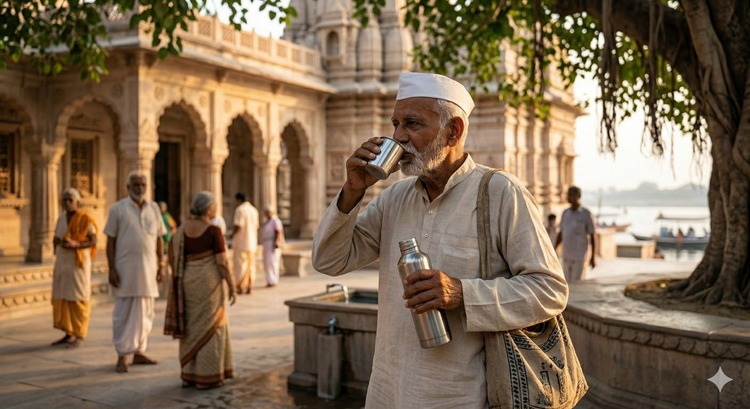
Proper hydration during pilgrimage: An elderly pilgrim drinking water from a stainless steel bottle at a temple courtyard, demonstrating the importance of maintaining fluid intake throughout the day to prevent dehydration and heat-related health issues.
5. Nutrition: Eating Smart During Spiritual Travel
Temple food is often satvik (pure vegetarian), which is wonderful spiritually but can create digestive challenges if your body isn't accustomed to sudden dietary changes.
The transition approach:
Don't make dramatic diet changes immediately upon arrival. If you normally eat non-vegetarian food, transition gradually over the first day. Sudden switches from rich home-cooked meals to simple temple prasad can upset digestion.
Managing common digestive issues:
Constipation affects many elderly travellers due to routine changes, different water, and stress. Combat this by:
- Maintaining fibre intake (fruits, vegetables)
- Drinking adequate water
- Walking regularly (aids digestion)
- Carrying gentle laxatives if you're prone to this problem
Acidity and heartburn increase during travel. Unfamiliar spices, eating times, and stress all contribute. I recommend:
- Eating smaller, frequent meals rather than large portions
- Avoiding very spicy foods initially
- Taking antacids preventatively if you're susceptible
- Not lying down immediately after eating
Blood sugar fluctuations for diabetics require special attention:
Irregular meal timing affects blood sugar. Carry glucose tablets for hypoglycaemia. Monitor blood sugar more frequently than usual (four times daily if normally you check twice). Adjust insulin doses in consultation with your doctor if meal times change significantly.
Safe eating guidelines:
- Stick to freshly cooked, hot food for the first few days
- Avoid raw vegetables and salads unless you trust the establishment
- Peel fruits yourself rather than eating pre-cut fruit
- Drink only bottled or boiled water
- Avoid street food unless you're confident about its safety
This doesn't mean missing out on regional cuisine. It means choosing wisely. Hotel restaurants and established eateries can prepare local specialities safely.
Special dietary needs:
If you require low-salt, low-sugar, or other dietary modifications, communicate this clearly when booking accommodation. Most quality hotels accommodate such requests with advance notice.
6. Climate Adaptation: Helping Your Body Adjust
Travelling from Bangalore's moderate climate to Varanasi's winter cold or Tirupati's summer heat stresses elderly bodies. Age reduces our ability to regulate body temperature efficiently.
Heat management in summer destinations:
If visiting Tirupati, Shirdi, or other warm locations during April to June:
- Schedule temple visits before 9 AM and after 5 PM. Midday heat (40°C+) is genuinely dangerous for seniors.
- Wear light-coloured, loose cotton clothing. Dark colours absorb heat. Tight clothing prevents ventilation.
- Use an umbrella, not just for rain but for sun protection. Wide-brimmed hats work too but can be cumbersome in crowds.
Recognise heat exhaustion symptoms: heavy sweating, weakness, cold and clammy skin, fast but weak pulse, nausea. If you experience these, move to shade immediately, drink water, and rest. Heat stroke is a medical emergency.
Cold weather in northern destinations:
Visiting Haridwar, Rishikesh, or Char Dham during November to February requires cold weather preparation:
- Layer clothing rather than wearing one thick garment. Layers trap warm air and allow adjustment as temperatures change.
- Protect extremities: warm socks, gloves, and a cap. Elderly people lose significant heat through the head.
Watch for hypothermia signs, especially early morning: shivering, confusion, slurred speech, drowsiness. Warm up gradually if this occurs.
Altitude considerations:
Char Dham destinations sit at 3,000+ metres altitude. This reduces oxygen availability. I assess patients' cardiovascular fitness carefully before approving high-altitude pilgrimages.
Altitude sickness symptoms: Headache, nausea, dizziness, shortness of breath, fatigue
Prevention:
- Ascend gradually when possible
- Stay well-hydrated
- Avoid alcohol
- Carry altitude sickness medication if prescribed
- Consider oxygen support (available at most high-altitude temples)
If symptoms are severe, descend immediately. No pilgrimage is worth a medical crisis.
7. Sleep and Rest: The Non-Negotiable Recovery Periods
Spiritual enthusiasm often overrides physical tiredness. I've watched elderly pilgrims push through exhaustion, believing rest is lazy or that they're "wasting" precious pilgrimage time. This is dangerous thinking.
Why rest matters more as we age:
Recovery takes longer. A young person bounces back from a tiring day in hours. At 65 or 70, you might need a full day's rest to recover from significant exertion. Sleep quality often deteriorates in unfamiliar environments. Factor this into planning. You won't sleep as well in a new place as you do at home.
The 2:1 activity-to-rest ratio:
For every two hours of activity (temple visits, walking, ceremonies), plan one hour of complete rest. This isn't optional padding. It's medical necessity.
Creating good sleep conditions whilst travelling:
- Request quiet rooms away from street noise. Temple towns can be loud, especially during festival periods.
- Carry earplugs and an eye mask. These simple items dramatically improve sleep quality.
- Maintain some routine. If you normally sleep by 10 PM, try to maintain this schedule. Irregular sleep patterns affect medication absorption and general wellbeing.
Recognising when you've overdone it:
Extreme fatigue that doesn't improve with overnight rest, persistent headaches, increased blood pressure readings, or unusual irritability all signal that you're pushing too hard. It's perfectly acceptable to skip planned activities and rest instead.
I remind patients that darshan's spiritual benefit doesn't diminish if you approach it rested and comfortable rather than exhausted and stressed.
Senior-friendly accommodation with essential rest facilities: Comfortable room featuring accessible bathroom with grab bars, firm beds, temple views, adequate lighting, and seating areas - demonstrating the importance of proper rest and recovery periods during pilgrimage.
8. Communication: Staying Connected for Safety and Peace of Mind
Medical emergencies require rapid communication. Family members want updates. Getting lost in unfamiliar temple towns creates genuine stress.
Mobile connectivity:
- Ensure your mobile phone works at your destination. Most of India has excellent coverage, but some remote pilgrimage sites (parts of Char Dham, for example) have limited connectivity.
- Keep your phone charged. Carry a portable power bank. A dead phone is useless in emergencies.
- Save critical numbers before leaving: local emergency services (108 for ambulance across India), your hotel, your tour operator, family contacts, and your regular doctor.
The buddy system:
Never wander off alone at crowded temples or unfamiliar areas. Stay with your travel companion or group. If you must separate temporarily, establish clear meeting points and times.
Medical identification:
- Wear a medical alert bracelet if you have serious conditions (diabetes, heart disease, severe allergies). In an emergency, this provides crucial information to paramedics.
- Carry a card in your wallet with emergency contacts, blood type, allergies, and current medications. A simple laminated card can save your life.
Language barriers:
English works in major pilgrimage destinations, but knowing a few Hindi or regional language phrases helps:
- "Mujhe madad chahiye" (I need help)
- "Dawai chahiye" (I need medicine)
- "Hospital kahan hai?" (Where is the hospital?)
Through our support services, we provide 24/7 phone access to assistance. This ensures help is always one call away, regardless of language or location challenges.
9. Travel Insurance: The Safety Net You Hope Never to Use
I never recommend elderly patients travel without comprehensive travel insurance. Medical emergencies during pilgrimage can be expensive and logistically complex.
What your insurance should cover:
- Medical expenses including hospitalisation, doctor consultations, and emergency medications. Verify coverage amounts are adequate (minimum ₹5 lakh for domestic travel).
- Emergency evacuation if you need transport to better medical facilities. This is particularly important for remote destinations.
- Trip cancellation or interruption if health problems force you to cut your pilgrimage short.
Pre-existing conditions:
Many insurance policies exclude pre-existing conditions unless you pay additional premiums. This is worth the extra cost. Your blood pressure medication is managing your condition, but what if you need hospitalisation for a related complication?
Read the fine print carefully. Some policies exclude adventure activities. If your pilgrimage involves any trekking or helicopter rides, ensure these are covered.
Keep documentation accessible:
- Policy number and emergency helpline number saved in your phone
- Physical copy of the policy in your travel documents
- Inform a family member about your insurance details
When to make a claim:
Don't hesitate to use your insurance if you need medical care. Some pilgrims avoid hospitals to "save money" or "not waste" their insurance. Your health isn't negotiable. That's precisely what insurance is for.
10. Listen to Your Body: The Most Important Advice I Can Give
After two decades advising elderly patients, I've noticed a pattern. Those who have the best pilgrimage experiences are those who honour their bodies' signals rather than pushing through discomfort.
What your body is telling you:
- Pain is communication, not weakness. That knee ache after climbing steps is information. Rest and reassess rather than powering through.
- Dizziness means stop immediately. Sit down, drink water, and don't resume activity until it passes completely.
- Chest discomfort, even mild, requires immediate medical evaluation. Don't assume it's indigestion without professional assessment.
The courage to modify plans:
Real courage isn't forcing yourself up Kedarnath steps against medical advice. Real courage is accepting your limitations whilst still experiencing profound spiritual fulfilment through adapted approaches.
- Skip activities that genuinely exceed your capabilities. There's no spiritual merit in ending up hospitalised.
- Accept assistance gracefully. Wheelchairs, helping hands, and slower pacing don't diminish your pilgrimage's authenticity.
When to seek medical care immediately:
- Chest pain or pressure
- Severe shortness of breath
- Sudden severe headache
- Slurred speech or facial drooping
- Severe abdominal pain
- High fever (over 101°F/38.3°C)
- Confusion or unusual behaviour
Don't wait to see if symptoms improve. Indian cities have good hospitals. Seek care promptly.
The spiritual perspective on physical limitations:
I'm a doctor, but I understand pilgrimage significance. Your physical body is the vehicle for spiritual experience. Caring for it properly isn't selfish. It's ensuring your vehicle completes the journey.
The divine doesn't measure devotion by physical suffering. Approaching darshan comfortable, safe, and mentally present creates more meaningful spiritual connection than arriving exhausted and stressed.
Final Thoughts: Devotion Paired with Wisdom
That 72-year-old patient I mentioned? She completed her Char Dham yatra last year. She used helicopter services for Kedarnath, took rest days between destinations, maintained her medication schedule perfectly, and returned home transformed by the experience, not traumatised by health problems.
Her success came from balancing spiritual aspiration with medical wisdom. She didn't let age stop her, but she also didn't ignore age-related needs.
Your pilgrimage is deeply personal. Whether you're visiting one temple or embarking on a comprehensive spiritual circuit, these ten guidelines provide the medical foundation for safe, comfortable travel. The divine will meet you wherever you are, however you arrive. Your responsibility is arriving safely, maintaining your health, and creating space for spiritual experience to unfold naturally.
Prepare intelligently. Travel wisely. Listen to your body. The rest will follow.
May your pilgrimage bring you the spiritual fulfilment you seek, supported by the physical wellbeing you deserve.
Frequently Asked Questions
Q: Should I inform my doctor about every pilgrimage I plan?
A: Yes, particularly for destinations involving significant physical exertion, altitude changes, or extended travel. Your doctor can assess whether your current health status supports the journey and adjust medications if needed.
Q: Can I travel with chronic conditions like diabetes or heart disease?
A: Absolutely. Most chronic conditions are manageable during pilgrimage with proper preparation, medication management, and realistic activity planning. Millions of seniors with chronic conditions complete successful pilgrimages annually.
Q: What vaccinations do I need for domestic pilgrimage travel?
A: No mandatory vaccinations are required for domestic Indian travel. Some doctors recommend Hepatitis A, particularly if you'll be eating at smaller establishments. Consult your doctor based on your specific destination and health history.
Q: How do I manage medication timing when travelling across time zones within India?
A: India spans one time zone, so this isn't a concern for domestic travel. However, irregular meal times during travel can affect medication schedules. Maintain consistent timing based on your watch rather than meal times when possible.
Q: Is travel insurance really necessary for domestic pilgrimages?
A: I strongly recommend it, particularly for seniors with pre-existing conditions. Medical emergencies can be expensive, and insurance provides both financial protection and logistical support during health crises far from home.
Q: What's the ideal group size for elderly pilgrims?
A: Smaller groups (4-8 people) work best. Large tour groups move too quickly and don't accommodate individual needs. Solo travel is possible but having at least one companion provides safety and support.
Q: Should I avoid certain destinations completely at my age?
A: Very few destinations are completely off-limits. High-altitude locations (Char Dham, Amarnath) require careful cardiovascular assessment. Destinations involving significant trekking may need alternatives like helicopter services. Consult your doctor about specific locations rather than assuming any are impossible.
Q: How can I build stamina for physically demanding pilgrimages?
A: Start a walking programme 6-8 weeks before travel. Begin with 10 minutes daily, gradually increasing to 30-40 minutes. Include stair climbing if your destination has steps. This preparation significantly improves your pilgrimage experience.