By Rajesh Kumar, Senior Travel Companion with 25+ years of pilgrimage experience
The morning mist rises from the Ganges, and I watch as 74-year-old Mrs. Patel takes her first steps onto Dashashwamedh Ghat. Her eyes fill with tears. "I never thought I'd make it here at my age," she whispers. In my 25 years of accompanying elderly pilgrims to Varanasi, I've heard this sentiment hundreds of times. Yet here's the truth I've learned: age should never be a barrier to experiencing the spiritual magnificence of Kashi.
Varanasi isn't just another pilgrimage destination. It's where Lord Shiva himself is believed to reside, where the sacred Ganges flows with the power to cleanse lifetimes of karma, and where every narrow lane seems to whisper ancient prayers. For senior citizens, visiting this eternal city requires more than just devotion. It needs careful planning, the right support, and insider knowledge about navigating its sacred chaos comfortably.
Let me share everything I've learned from guiding elderly pilgrims through Varanasi's spiritual treasures whilst ensuring their safety, comfort, and dignity at every step.
Why Varanasi Holds Special Significance for Senior Citizens
There's a reason why Varanasi tops every elderly pilgrim's spiritual bucket list. Hindus believe that dying in Kashi grants moksha, liberation from the cycle of rebirth. But you don't need to wait for your final journey to experience this city's profound spiritual energy.
I've watched countless seniors find peace here that eluded them their entire lives. The evening Ganga Aarti, with its synchronized flames and devotional chants, creates an atmosphere that transcends age and physical limitations. The newly renovated Kashi Vishwanath Corridor has transformed the temple experience, making it more accessible whilst preserving its sacred essence.
Senior citizens enjoying comfortable dining facilities with accessible design features including wheelchair access, handrails, and attentive staff assistance in a well-lit, spacious restaurant setting near the temple corridor.
What makes Varanasi special now: The Kashi Vishwanath Corridor project, completed in recent years, has revolutionised the senior citizen experience. What was once a congested, difficult-to-navigate temple approach is now a spacious, well-lit corridor with smooth flooring, wheelchairs available, and dedicated queues for elderly devotees. Through our partnerships with temple authorities, we arrange priority access that means seniors rarely wait more than 30 minutes, even during peak seasons.
Understanding Varanasi's Layout: A Senior-Friendly Perspective
Varanasi can overwhelm first-time visitors. The old city's narrow lanes weren't designed for modern accessibility. However, knowing which areas are senior-friendly makes all the difference.
The Three Zones You Need to Know
Zone 1: The Temple Corridor (Most Accessible)
The Kashi Vishwanath Temple and its new corridor occupy pride of place. Wide pathways, ramps where needed, and air-conditioned rest areas every 100 metres make this the most comfortable spiritual experience in Varanasi. I always start elderly pilgrims here because success builds confidence.
Zone 2: The Main Ghats (Moderately Accessible)
Dashashwamedh, Assi, and Manikarnika Ghats have vehicle access nearby. The steps can be challenging, but we've identified specific routes and timing that minimise walking. Early morning or late evening visits avoid both crowds and the scorching midday sun.
Zone 3: The Old City Lanes (Challenging but Manageable)
Those atmospheric narrow lanes you see in photographs? They're beautiful but difficult for seniors. We use cycle rickshaws driven by experienced local operators who know which routes avoid the steepest areas and navigate the crowds with patience.
Senior citizens comfortably seated on cushioned platforms with backrests viewing the spectacular evening Ganga Aarti ceremony at Dashashwamedh Ghat, with priests performing synchronized rituals with fire lamps along the sacred Ganges.
Best Time to Visit Varanasi for Senior Citizens
After guiding pilgrims through every season, I can tell you that timing makes an enormous difference to your comfort and experience.
October to March: The Golden Window
Why this period works best: Temperatures range between 10°C to 25°C, perfect for elderly travellers. The Ganges water level is comfortable for ritual bathing, and the evening aarti happens at a pleasant hour (around 6:30 PM when it's still warm enough).
I particularly recommend November. The Diwali festivities have passed, crowds have thinned slightly, yet the spiritual energy remains electric. Dev Deepawali (November full moon) is spectacular if you don't mind larger gatherings.
What to expect month by month:
- October: Pleasant but can still have lingering monsoon humidity. Pack light woolens for evenings.
- November-December: Perfect weather. Minimal fog. This is peak season, so book accommodation well in advance.
- January-February: Coldest months. Morning fog can be dense until 9 AM, which affects boat rides and sunrise viewings. Excellent for seniors who prefer cooler temperatures, but pack warm clothing.
- March: Warming up but still comfortable. Holi celebrations can make the city crowded and chaotic. I usually advise seniors to avoid the week around Holi unless they're specifically interested in the festival.
April to September: Approach with Caution
The summer months (April-June) bring temperatures exceeding 40°C. I've seen robust seniors struggle with this heat. If you must visit during summer, plan temple visits before 8 AM and after 6 PM.
Monsoon (July-September) brings relief from heat but creates slippery ghat steps and unpredictable weather. The Ganges swells, which is spiritually significant but can make access difficult for those with mobility concerns.
The Sacred Sites: Where to Go and How to Access Them
Kashi Vishwanath Temple: Your Primary Spiritual Destination
This is where Lord Shiva's jyotirlinga resides, making it one of India's twelve most sacred Shiva temples. The new corridor has made visiting remarkably easier for seniors.
Example of senior-friendly accommodation featuring an accessible bathroom with grab bars, non-slip flooring, western commode, and a comfortable bedroom with views of temple architecture, ensuring safety and convenience for elderly pilgrims.
Accessing the temple comfortably:
Through our arrangements with temple management, senior citizens enter through the designated Manikarnika Ghat entrance. This route involves fewer steps and has wheelchair assistance available. The entire corridor is wheelchair accessible, though I recommend using the temple-provided wheelchairs rather than bringing your own, as the staff knows the exact routes and timings.
Best visiting times: Early morning darshan (4 AM to 7 AM) offers cooler temperatures and smaller crowds. For seniors who can't manage early hours, the afternoon slot (2 PM to 4 PM) sees moderate crowds. Evening darshan gets very crowded but the energy is extraordinary.
What to expect: Even with VIP access, expect to walk approximately 200 metres within the temple complex. The marble flooring is smooth and well-maintained. Rest benches are available every 50 metres. The actual darshan takes 3 to 5 minutes. Photography isn't allowed inside the temple sanctum.
Dress code and preparations:
- Men: Dhoti or simple trousers with shirt
- Women: Saree or salwar kameez (shoulders and knees covered)
- No leather items allowed (belts, purses, shoes)
We arrange secure locker facilities for belongings and provide appropriate footwear for seniors who struggle with walking barefoot on marble.
The Sacred Ghats: Where to Go and What to Skip
Varanasi has 88 ghats, but I focus elderly pilgrims on these five for their spiritual significance and reasonable accessibility:
Peaceful morning scene at the ghats with senior citizens sitting comfortably on the steps during sunrise, engaging in spiritual discussions while boats line the sacred Ganges, showcasing the serene atmosphere of early morning Varanasi.
1. Dashashwamedh Ghat (Must Visit)
The main ghat where the evening Ganga Aarti happens. We arrange premium seating on elevated platforms where seniors can sit comfortably whilst witnessing the ceremony. Vehicle access comes within 100 metres. The steps are wide and have railings.
- Best time: Evening aarti at 6:30 PM (winter) or 7 PM (summer)
- Accessibility: Good. Wheelchair users can view from the top platform.
- What to expect: Spectacular ceremony lasting 45 minutes with seven priests performing synchronized rituals.
2. Assi Ghat (Gentle and Peaceful)
The southernmost main ghat, popular with yoga enthusiasts and those seeking a quieter experience. Morning aarti here is smaller, more intimate, and deeply moving.
- Best time: Sunrise (5:30 AM to 7 AM)
- Accessibility: Excellent. Gentle slope, less crowded, nearby parking
- What to expect: Smaller aarti, opportunity for boat rides, nearby cafes for rest
3. Manikarnika Ghat (The Cremation Ghat)
This is Varanasi's primary cremation ground, considered highly auspicious. Many seniors want to witness this cycle of life and death. However, I must be honest about the challenges.
- Best time: Early morning or late evening to avoid crowds
- Accessibility: Moderate. Steps are steep in places
- What to expect: Active cremations happening 24/7. Emotionally intense. Photography strictly prohibited.
I always ask elderly pilgrims if they're emotionally and physically prepared for this experience. Some find it profoundly spiritual; others find it overwhelming. There's no shame in observing from a distance or skipping it entirely.
4. Harishchandra Ghat (Alternative Cremation Ghat)
Less crowded than Manikarnika, offering a similar spiritual experience with better accessibility.
5. Panchganga Ghat
Where five rivers are believed to meet. Less commercialized, spiritually significant, and easier to access than many other ghats.
Temple staff providing compassionate assistance to an elderly pilgrim walking with a cane through the well-maintained Kashi Vishwanath Corridor, with wheelchair facilities visible in the background, demonstrating the senior-friendly infrastructure.
Sarnath: The Buddhist Connection (Highly Recommended)
Just 10 kilometres from Varanasi, Sarnath is where Buddha gave his first sermon. The contrast to Varanasi's intensity is remarkable. Peaceful gardens, well-maintained pathways, and excellent facilities make this ideal for seniors.
- Accessibility: Outstanding. Smooth pathways, wheelchairs available, benches throughout
- Travel time: 30 minutes from central Varanasi
- What to see: Dhamek Stupa, Mulagandha Kuti Vihar, Archaeological Museum
- Best time: Morning (8 AM to 11 AM) before it gets too warm
Many elderly pilgrims tell me Sarnath provides the contemplative experience they'd hoped to find in Varanasi. I recommend dedicating a full morning here.
Accommodation: Where to Stay for Comfort and Convenience
Your choice of accommodation dramatically affects your Varanasi experience, especially at an older age.
The Three Best Areas for Senior Citizens
1. Near Godaulia/Kashi Vishwanath Corridor (Best for Temple Access)
- Advantages: Walking distance to temple, spiritual atmosphere, easy access to main ghats
- Disadvantages: Noise, narrow lanes make vehicle access limited
- Best for: Mobile seniors who prioritize proximity to sacred sites
Recommended properties: Hotels near the corridor entrance offer the best balance. Look for properties with lifts, ground-floor rooms, and attached western-style bathrooms. Through our partnerships, we've identified hotels with senior-friendly features like grab bars in bathrooms, firm mattresses, and 24-hour room service.
2. Assi Ghat Area (Best for Peaceful Atmosphere)
- Advantages: Quieter, better air quality, cafes and restaurants nearby, easier vehicle access
- Disadvantages: 6 kilometres from Kashi Vishwanath (15-minute drive)
- Best for: Seniors wanting calm surroundings with easy access to spiritual sites
The area around Assi has developed into Varanasi's most comfortable neighbourhood whilst maintaining its spiritual character. Many heritage properties here have been renovated with modern amenities.
3. Cantonment Area (Best for Medical Access and Modern Amenities)
- Advantages: Modern hotels, excellent medical facilities nearby, quiet, clean air
- Disadvantages: 8 kilometres from old city, less spiritual atmosphere
- Best for: Seniors with health concerns who need proximity to hospitals
I recommend this area for elderly pilgrims with existing medical conditions or those who find the old city's intensity overwhelming.
Senior citizens walking comfortably through the illuminated Kashi Vishwanath Corridor during evening hours, showcasing the spacious pathways, architectural beauty, and accessibility features that make temple visits comfortable for elderly devotees.
Essential Room Features to Request
After countless bookings, I insist on these features for senior citizens:
Must-haves:
- Ground floor or lift access
- Attached bathroom with western commode
- Firm mattress (many Indian hotels have soft mattresses that create back problems)
- Hot water 24/7
- Air conditioning with heating option (winter nights get cold)
- Bedside lamp with adequate reading light
Nice-to-haves:
- Bathtub grab bars
- Non-slip bathroom flooring
- Room service
- Refrigerator for medication storage
- Balcony or window with natural light
Getting Around Varanasi: Transportation for Seniors
Varanasi's narrow lanes make navigation tricky, but various options work well for elderly travellers.
Within the Old City
- Cycle Rickshaws: The traditional way to navigate narrow lanes. We work with specific rickshaw drivers who understand elderly passengers need slower speeds and careful handling. A 30-minute ride costs ₹100-150.
- Walking (Limited Distances): The temple corridor and main ghats require some walking. I plan routes that minimize distances and include rest stops every 100 metres.
- Wheelchairs: Temple authorities provide wheelchairs at major sites. We arrange personal wheelchair assistance when needed through trained attendants who know accessible routes.
Longer Distances
- Private Air-Conditioned Cars: For Sarnath visits and airport transfers. Comfortable sedans with experienced drivers who understand senior passengers' needs.
- E-Rickshaws: Eco-friendly and increasingly common. Good for short distances (ghat to ghat). Cost: ₹20-50 per trip.
What to Avoid:
- Auto rickshaws in the old city (too bumpy and loud)
- Shared transport (uncomfortable and unpredictable)
- Walking in midday heat (risk of dehydration and exhaustion)
The Ganga Aarti Experience: Making it Comfortable and Memorable
The evening Ganga Aarti at Dashashwamedh Ghat is Varanasi's spiritual centerpiece. I've watched thousands of pilgrims experience this ceremony, and it never loses its power to move people to tears.
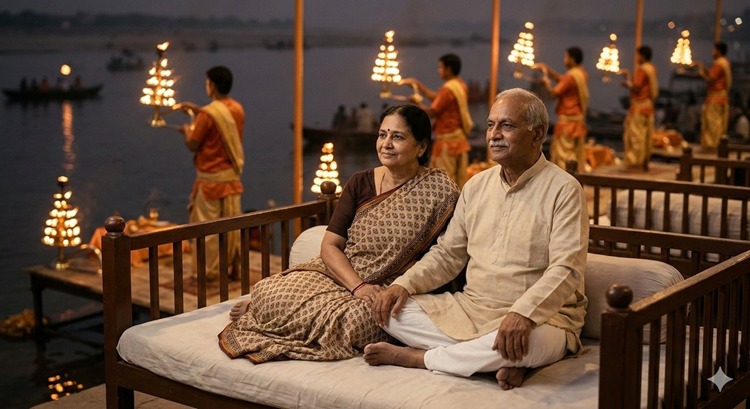
An elderly couple seated peacefully on comfortable cushioned seating watching the mesmerizing evening Ganga Aarti from the riverfront, with illuminated tiered lamps and priests performing rituals in the background, capturing the profound spiritual atmosphere.
How We Make it Senior-Friendly
Reserved Seating: Through our arrangements, senior citizens get elevated platform seating with backrests. This eliminates standing for 45 minutes and provides the best viewing angle. We arrive 45 minutes early to secure these spots and give you time to settle comfortably.
Comfort Considerations: The ceremony happens on marble steps that can be hard for extended sitting. We provide cushions and back support. Evening temperatures (especially November-January) can be cool, so bring a light shawl.
Alternative Viewing Options: Boat viewing from the river provides a different perspective and eliminates crowd navigation. We arrange private boats with cushioned seating and life jackets. The boat rocks gently, which some seniors find soothing whilst others find unsettling. Discuss your comfort level beforehand.
Timing Strategy: The main aarti gets extremely crowded. We sometimes arrange attendance at the smaller morning aarti at Assi Ghat (6 AM), which offers similar spiritual energy with 90% fewer people.
Health and Safety: Medical Preparations and Precautions
In 25 years, I've learned that health preparation makes the difference between a transcendent experience and a medical emergency.
Pre-Travel Health Check
Visit your doctor 4 weeks before travel. Discuss:
- Your fitness for walking on uneven surfaces
- Altitude isn't a concern in Varanasi, but heat stress is
- Any vaccinations needed (though none are mandatory)
- Medication adjustments for travel
Essential Medical Kit for Varanasi
Must carry:
- Regular prescription medications (double the amount you think you'll need)
- Antacids and digestive enzymes (food changes affect digestion)
- Electral or ORS packets (dehydration is common)
- Basic first aid supplies
- Blood pressure monitor if you're hypertensive
- Glucose tablets if diabetic
Through Our Medical Partnerships: We maintain connections with three hospitals near common accommodation areas. BHU Hospital (Varanasi's premier facility) is our primary recommendation. We carry emergency contact numbers and can arrange immediate medical attention when needed.
Common Health Challenges and Solutions
Digestive Issues: The most common complaint. Varanasi's street food is legendary but risky for sensitive stomachs. We recommend seniors stick to hotel food or vetted restaurants for the first 48 hours.
Dehydration: The dry air and walking cause more fluid loss than expected. I insist elderly pilgrims drink 3 litres of water daily, carried in small bottles for convenience.
Fatigue: The spiritual intensity combined with physical demands exhausts many seniors. We build in mandatory rest periods every 2-3 hours.
Air Quality: Varanasi's air pollution can affect respiratory health. Seniors with asthma or COPD should carry inhalers and avoid early morning fog when pollution is trapped.
Cultural Etiquette: Navigating Varanasi Respectfully
Varanasi's spiritual significance demands respectful behaviour, and I've found that understanding these norms enhances your experience.
At the Ghats
Do:
- Remove shoes before stepping onto ghat areas
- Dress modestly (shoulders and knees covered)
- Ask permission before photographing people (especially at cremation ghats)
- Step aside for funeral processions (they have right of way)
Don't:
- Point your feet towards the Ganges or temples
- Sit or stand higher than religious symbols or idols
- Photograph cremations at Manikarnika (deeply disrespectful)
- Shout or create disturbance during ceremonies
At Temples
Varanasi follows traditional Hindu temple customs. Non-Hindus can enter most temples but should show respect. The Kashi Vishwanath Temple allows all devotees who follow dress codes and protocols.
Interacting with Locals
Varanasi's priests, shopkeepers, and boat operators approach pilgrims constantly. It's business for them, devotion for you. Setting clear boundaries whilst remaining polite works best.
Helpful Hindi phrases:
- "Nahi chahiye, dhanyavaad" (No thank you)
- "Kitna paisa?" (How much money?)
- "Yeh theek hai" (This is fine/acceptable)
Local people generally show extra respect and patience with elderly pilgrims. Use this goodwill wisely rather than taking advantage.
Food and Dining: Eating Safely and Well
Varanasi's cuisine is predominantly vegetarian and ranges from simple satvik food to rich Banarasi specialties.
Safe Dining Options for Seniors
Hotel Restaurants: Your safest bet for the first few days. Most quality hotels serve both North Indian and South Indian cuisine prepared with hygienic practices.
Recommended Restaurants: We've vetted several restaurants near major accommodation areas that maintain high hygiene standards whilst offering authentic Banarasi flavours. Brown Bread Bakery near Assi Ghat serves excellent continental food for seniors who need familiar tastes.
Street Food Caution: Varanasi's street food is iconic but poses risks for elderly digestion. If you must try it, stick to hot, freshly prepared items and avoid cut fruits, ice, or anything that's been sitting out.
Dietary Considerations
- For Diabetics: Most restaurants offer rotis without added ghee and sabzi without excess oil. Carry glucose monitoring equipment.
- For Heart Conditions: Request low-salt preparations. Avoid deep-fried items like kachoris and samosas, no matter how tempting.
- Hydration: Drink only bottled water. The Ganges water is sacred but not potable without purification.
Traditional Banarasi Foods Worth Trying (Carefully)
- Banarasi Paan: The city's famous betel leaf preparation. If you're adventurous and your digestion is robust, try the sweet meetha paan (avoid tobacco versions).
- Malaiyo: A winter delicacy available November-February. Light and easy on the stomach.
- Tamatar Chaat: If you want to try street food, this is relatively safe (fresh, no heavy spices).
The Boat Ride Experience: Sunrise on the Ganges
A sunrise boat ride on the Ganges ranks among Varanasi's most profound experiences. The city awakens slowly, ghats come alive with morning rituals, and the golden light transforms everything.
Making it Senior-Friendly
Choosing the Right Boat: We arrange boats with cushioned seating, sturdy boarding steps, and experienced oarsmen who row smoothly. The typical boat ride lasts 60-90 minutes.
Safety Considerations:
- Life jackets are mandatory (we insist on this regardless of what boatmen say)
- Boarding requires stepping down into the boat (we provide arm support)
- Seats are low (difficult for seniors with knee problems)
- River water splashes occasionally (waterproof clothing recommended)
Best Time:
- Winter: 6 AM start
- Summer: 5:30 AM start
The morning is cool, peaceful, and you witness the ghats' spiritual activities: priests performing pujas, devotees taking holy dips, cremations at Manikarnika.
Alternative: If boats seem too risky, viewing sunrise from Assi Ghat whilst seated comfortably offers similar spiritual benefits without physical challenges.
Packing Essentials for Senior Citizens Visiting Varanasi
After helping hundreds of elderly pilgrims pack, I've refined this to absolute essentials:
Clothing
- Comfortable walking shoes (you'll remove them often, so slip-ons work best)
- Cotton clothes (breathable in heat)
- Light woolen layer (November-February evenings)
- Modest clothing for temple visits
- Extra pair of glasses (if you wear them)
Health Items
- All medications in original packaging
- Copies of prescriptions
- Basic first aid kit
- Mosquito repellent (evenings near the river)
- Sunscreen (even winter sun is strong)
Practical Items
- Small backpack (leaves hands free)
- Water bottle
- Wet wipes (bathrooms aren't always well-equipped)
- Hand sanitizer
- Torch (narrow lanes have poor lighting)
- Photocopies of ID documents
Spiritual Items
- Small pooja items if you perform personal rituals
- Notebook for recording experiences
- Camera (with extra memory cards)
What NOT to Bring:
- Expensive jewelry
- Leather items (not allowed in temples)
- Too many clothes (laundry service is available everywhere)
Common Concerns Elderly Pilgrims Share (And My Honest Answers)
"Will I manage the walking?"
With proper planning, absolutely. We design routes minimizing walking distances and build in rest periods. Wheelchairs and assistance are available when needed.
"Is it safe for my age?"
Varanasi is remarkably safe for elderly travellers. The biggest risks are falls on uneven surfaces and digestive issues, both manageable with precautions.
"What if I have a medical emergency?"
We maintain partnerships with quality hospitals and carry emergency protocols. Mobile networks work well throughout the city for immediate communication.
"Will the crowds overwhelm me?"
They can be intense, which is why we visit major sites at optimal times and arrange VIP access where possible. Assi Ghat and Sarnath offer peaceful alternatives.
"Can I bathe in the Ganges at my age?"
Yes, with assistance. We arrange controlled bathing experiences at safer ghats with steps and railings. The spiritual significance makes this meaningful for many seniors.
"Is the food safe?"
Hotel and vetted restaurant food is perfectly safe. We guide you to reliable dining options throughout your stay.
A Sample 4-Day Itinerary for Senior Citizens
Based on countless successful trips, here's my recommended schedule:
Day 1: Arrival and Temple
- Morning: Arrive Varanasi, settle into accommodation, rest
- Afternoon: Kashi Vishwanath Temple VIP darshan
- Evening: Light dinner, early sleep
Day 2: Spiritual Immersion
- Early morning: Sunrise boat ride
- Late morning: Rest, breakfast
- Afternoon: Visit Sankat Mochan Temple and Durga Temple (both accessible)
- Evening: Ganga Aarti at Dashashwamedh Ghat from reserved seating
Day 3: Buddhist Heritage
- Morning: Sarnath full experience (museum, stupas, temples)
- Afternoon: Rest
- Evening: Smaller aarti at Assi Ghat
Day 4: Personal Exploration and Departure
- Morning: Personal time for shopping or visiting specific sites
- Afternoon: Departure
This pacing allows rest, includes major experiences, and doesn't overwhelm. Adjust based on your energy levels and interests.
Why Professional Assistance Makes the Difference
I'll be honest: you can visit Varanasi independently at any age. But after watching elderly pilgrims struggle needlessly with logistics whilst missing spiritual experiences because they're exhausted or lost, I believe professional assistance transforms the journey.
What we handle:
- VIP temple access arrangements
- Reliable, senior-sensitive transportation
- Vetted accommodation with necessary facilities
- Medical emergency protocols
- Cultural guidance and translation
- Optimal routing that minimizes physical strain
- All logistics so you focus solely on spiritual experience
The difference: Independent travel might save money but costs energy and peace of mind. Our services ensure dignity, comfort, and comprehensive spiritual fulfillment at an age when these journeys carry profound meaning.
Final Thoughts: Making Your Varanasi Dream a Reality
Mrs. Patel, whom I mentioned at the beginning, spent three days in Varanasi last year. She bathed in the Ganges at Assi Ghat, witnessed the Kashi Vishwanath jyotirlinga, and sat peacefully at Sarnath contemplating Buddha's teachings. At 74, with diabetes and mild arthritis, she'd convinced herself this journey was impossible.
What made the difference wasn't miraculous health improvement. It was planning, appropriate support, and knowledge of how to navigate Varanasi's spiritual treasures comfortably.
Varanasi welcomes every devotee regardless of age. The city's sacred energy doesn't discriminate between the young and elderly. Your silver hair and slower pace don't diminish your right to experience Kashi's spiritual magnificence.
This ancient city has witnessed countless generations of pilgrims. Your visit continues this timeless tradition. With proper preparation and the right support, your age becomes irrelevant. What matters is your devotion, your readiness to experience something beyond the ordinary, and your willingness to let Varanasi work its transformative magic on your soul.
The Ganges has flowed here for millennia. It will be here when you arrive, ready to bless you with its sacred waters. Your only job is to show up, allow yourself to be supported where needed, and open your heart to the experience.
Har Har Mahadev. Jai Ganga Maiya.
Frequently Asked Questions
Q: What is the best month to visit Varanasi for senior citizens?
A: November offers the ideal combination of pleasant weather (15-25°C), manageable crowds, and excellent visibility. October through February is the overall best window, avoiding summer heat and monsoon complications.
Q: How do I book VIP darshan at Kashi Vishwanath Temple for elderly parents?
A: VIP darshan can be arranged through the temple's official website or through established tour operators who maintain partnerships with temple authorities. We handle all booking formalities and ensure priority access with minimal waiting.
Q: Is Varanasi wheelchair accessible for senior citizens?
A: The Kashi Vishwanath Corridor is fully wheelchair accessible. Major ghats have partial accessibility, with Assi Ghat being the most manageable. We arrange wheelchair assistance and identify accessible routes for each site.
Q: What medical facilities are available in Varanasi for emergencies?
A: BHU Hospital (Banaras Hindu University) provides excellent emergency care. Several private hospitals near the cantonment area offer quality treatment. We maintain emergency contacts and can arrange immediate medical attention.
Q: Can senior citizens bathe in the Ganges safely?
A: Yes, with proper assistance and at appropriate locations. Assi Ghat offers the safest bathing experience with steps, railings, and calmer waters. We provide trained attendants to ensure safety during this sacred ritual.
Q: How long should a senior citizen plan to stay in Varanasi?
A: Four to five days allows comfortable exploration without exhaustion. This includes major temples, ghats, Sarnath, and adequate rest periods between activities.
Q: What about food safety for elderly travellers with sensitive digestion?
A: Hotel restaurants and vetted establishments maintain high hygiene standards. We recommend avoiding street food initially and drinking only bottled water. Most quality hotels offer bland, easy-to-digest options on request.
Q: Is it safe for elderly women to travel to Varanasi alone?
A: Varanasi is generally safe, and locals show respect to elderly pilgrims. However, we recommend accompanied travel or professional tour services for navigation assistance and enhanced safety.